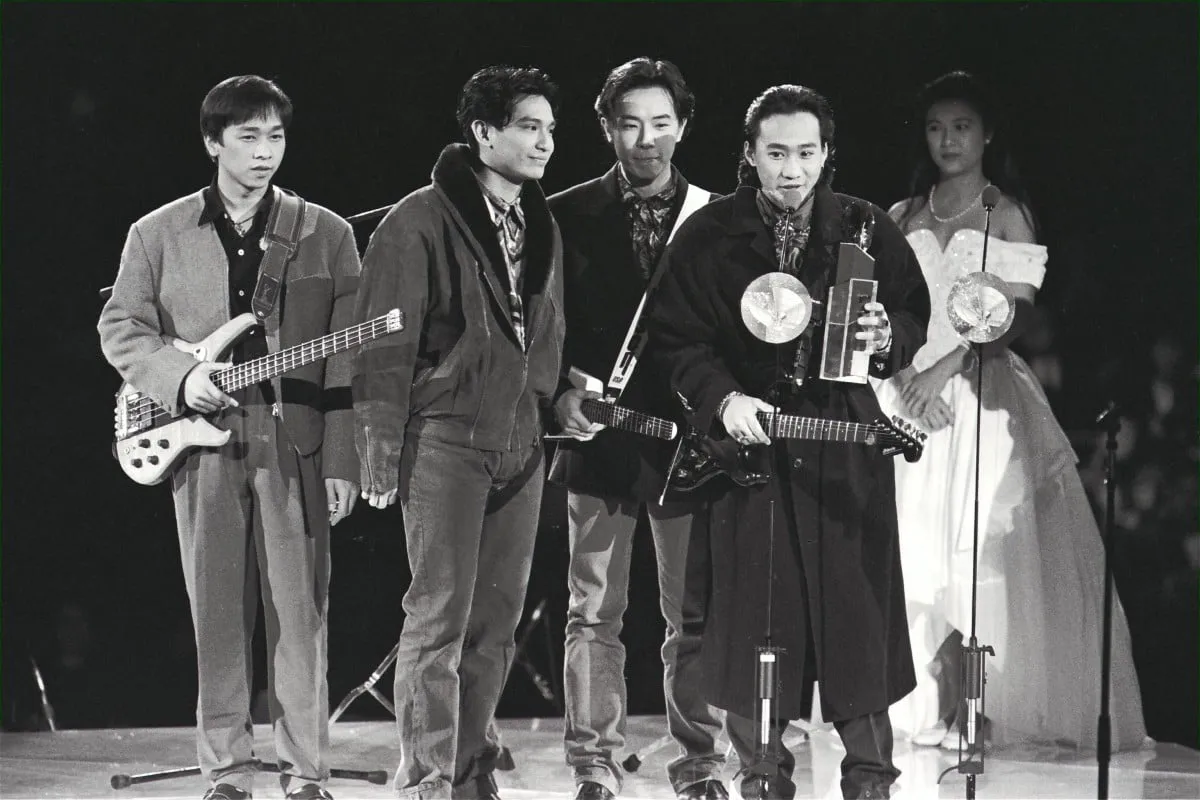
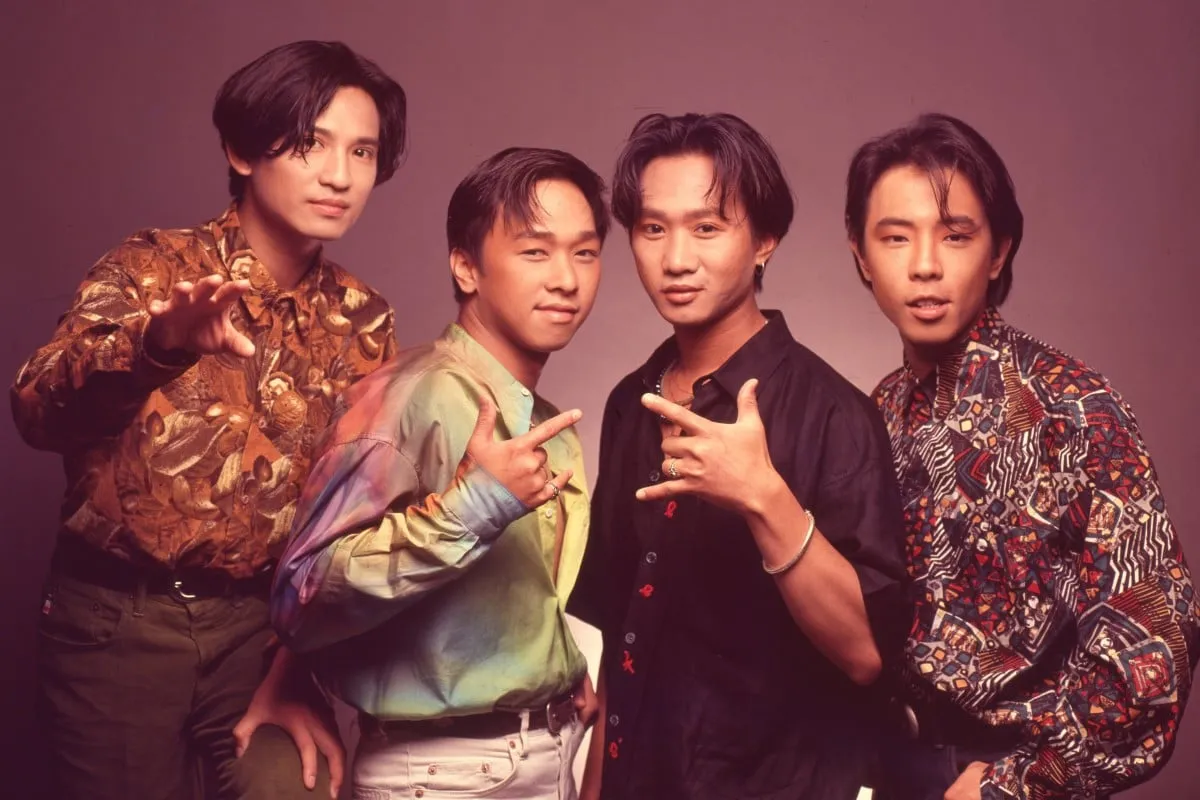
 Beyond members Yip Sai-wing, Wong Ka-keung, Wong Ka-kui and Paul Wong Koon-chung in 1990. The Hong Kong rock band formed in 1983 and were popular across Asia. Photo: SCMP
For South Africa, February 11, 1990 is a memorable date. On that day, anti-apartheid activist and future president Nelson Mandela was released from the Victor Verster Prison after spending 27 years behind bars.
Exiting hand in hand with his wife Winnie, he was greeted by a euphoric crowd of supporters who had waited hours outside the gates to see him walk out as a free man.
It was a historic moment that marked the beginning of the end of apartheid.
News of Mandela’s release was circulated around the world. Hong Kong singer Wong Ka-kui was so inspired that he wrote a song dedicated to Mandela’s story and struggle for freedom.
Called “Glorious Years”, the Cantonese song, as performed by Wong’s rock band Beyond, became an instant hit when it was released in September 1990.
Even today, its lyrics – which speak of freedom, equality and change – remain as powerful and poignant as ever and continue to resonate among today’s younger generations in Hong Kong.


Leslie Chan Kin-tim, who managed Beyond from 1986 to 1993, recalls listening to an early demo of “Glorious Years” and immediately thinking that it would be a success.
“I didn’t think it would become as significant [as it did], and didn’t think so far ahead at the time. I just knew that it would be a hit song,” he says.
Given that Wong wrote the lyrics to the song himself, instead of soliciting other lyricists such as Gene Lau – who wrote the words for many of the band’s greatest hits – there was a deep sense of sincerity inherent in the song, Chan says.
“Ka-kui was 27 years old at the time and coincidentally Mandela had been in prison for 27 years,” he says. “The song is very obviously a very honest representation of his real feelings. And of course, he sang it himself, so I think people heard a very authentic song.”
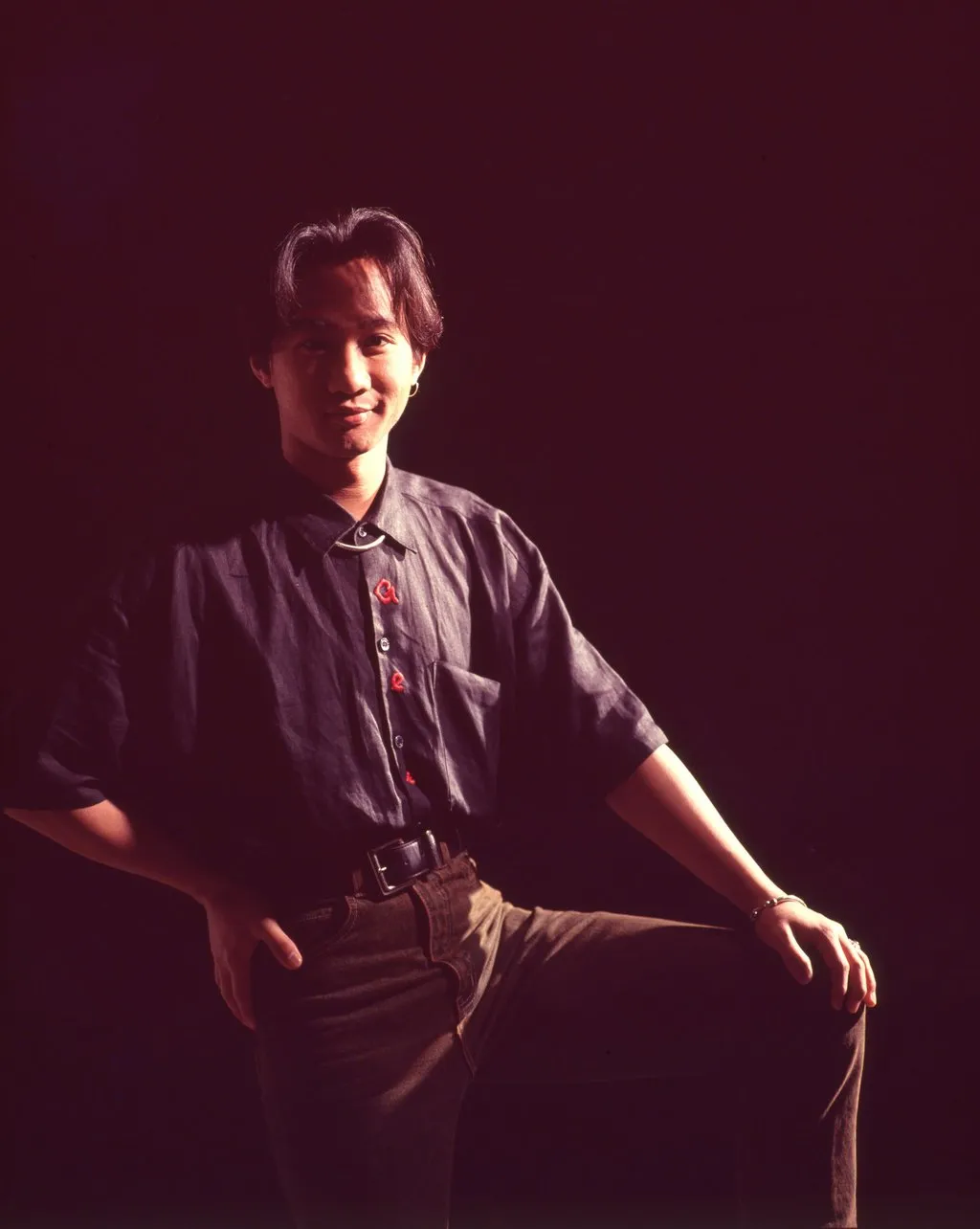 Wong Ka-Kui died in 1993 aged 31 due to an accident while filming a gameshow in Tokyo, Japan. TVB Weekly
When the song was first released, Edmond Tsang was in secondary school. Now a music professor at Hong Kong Baptist University and a Cantopop songwriter who has worked with Andy Lau and Hacken Lee, he recalls many people around him being Beyond fans.
Aside from the song’s authenticity, he believes that “Glorious Years” became an instant classic because of several factors.
One of them was the music. The smooth-flowing melody is catchy and easy to remember, so people were able to sing along to it, especially during karaoke sessions, he says.
“From the 1990s onwards, when karaoke started steadily growing, people really liked to sing songs that they could sing, but that had a level of difficulty so that they could show their voice.
“We can’t call this a [karaoke] song, but it really has that quality – singing it during karaoke gives that cathartic feeling, a really satisfying feeling.”
 Edmond Tsang is a music professor at Hong Kong Baptist University and a Cantopop songwriter. Photo: Edmond Tsang
The song’s subject matter, and how it related to society at the time, was another factor.
The topics addressed – racism and the fight for equality – were timely and the lyrics direct and easy to understand. For example, during the chorus, Wong sings: “Can’t we do away with divisions between skin colours? / On this earth, let’s not divide who is high and low.”
Tsang says people growing up at the time would have been familiar with Mandela’s situation in South Africa because of extensive coverage in the news. “So combine lyrics that are very easy to grasp with the fact that everyone understands the story, and there’s a sense of familiarity.”
It also helped that Beyond’s music “provided a sense of freshness” for the industry in a city where hit songs have always tended to be love songs, Tsang says.
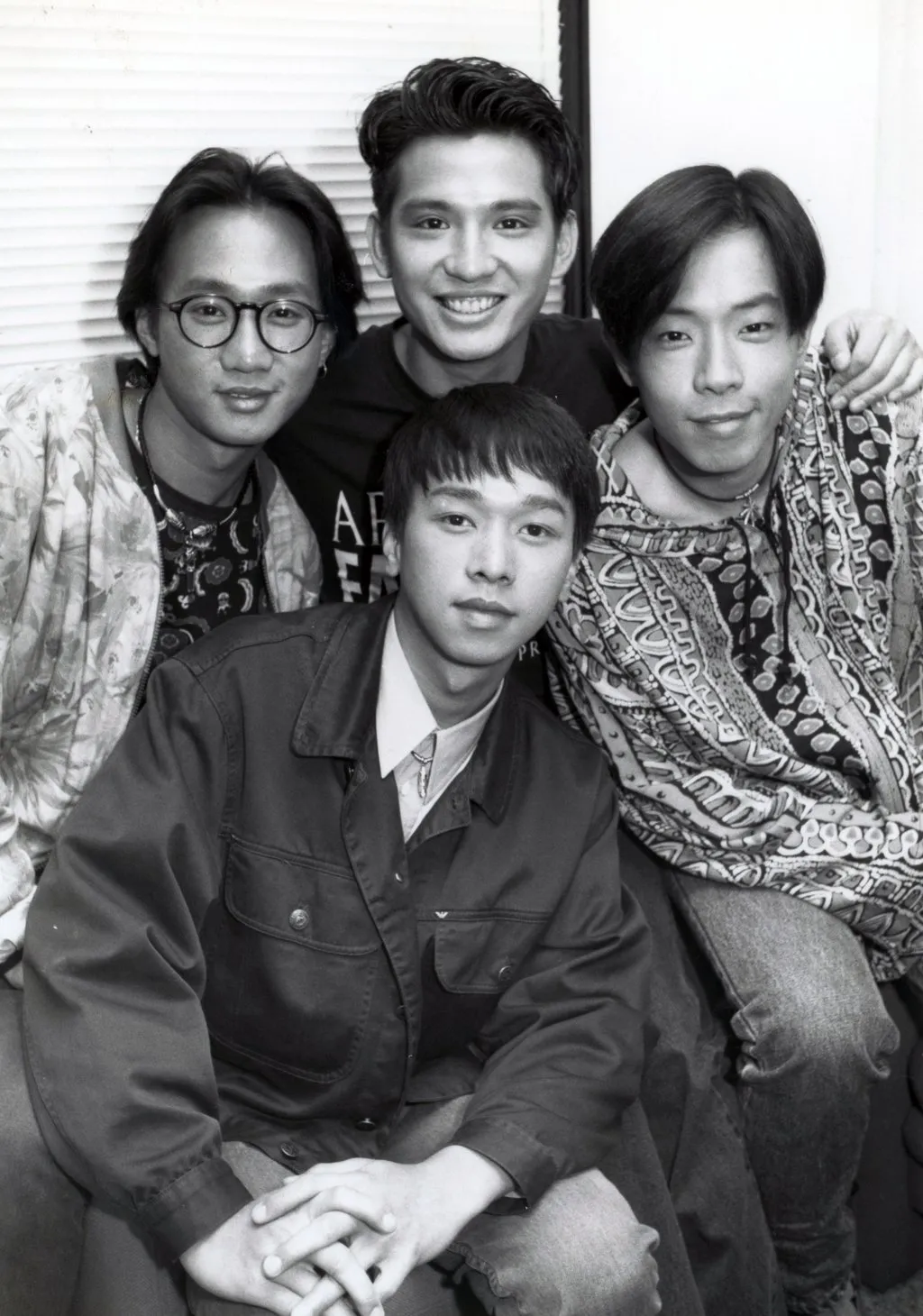 Beyond in the band’s early years. Photo: M. Chan
Though Chan knew early on that “Glorious Years” would be a hit, he was still surprised at how it kept increasing in popularity, especially among mainland Chinese fans – even after Wong tragically died in 1993 due to an accident while filming a game show in Tokyo, Japan.
“When Ka-kui was still [in Hong Kong], he rarely held concerts on the mainland, and he wasn’t particularly popular there either. But after his accident, suddenly … I saw that everyone was selling pirated cassette tapes of Beyond songs on the street in Beijing,” Chan says.
“I thought it was quite mysterious why so many people were buying them. At the time, whenever I took a taxi in Beijing, seven or eight times out of 10, the taxi driver was listening to a cassette tape of Beyond’s songs.”
After speaking to numerous mainland Chinese fans and even Beyond drummer Yip Sai-wing, who spent some time in Beijing, Chan came to realise that Beyond’s lyrics reflected a lot of young people’s state of mind, which is why they were so deeply affected by the band’s songs even if they were in Cantonese, not Mandarin.
“They gave me this impression – that when they were studying university, and were struggling and didn’t know what to do next, listening to Beyond’s songs gave them a sense of rejuvenation,” he says.
“A lot of times, when they face difficulties or disappointment, they might not know how to deal with it and might not openly share with friends how they really feel. So when they hear a song that reflects their desires and what they’re facing, [they will relate].”
 Beyond’s music “provided a sense of freshness” to the music landscape in Hong Kong at the time, Edmond Tsang says. TVB Weekly
In particular, he says, “Glorious Years” offers a sense of optimism and motivation. Like another of Beyond’s beloved singles, “Boundless Oceans, Vast Skies”, the song was often sung as an anthem in Hong Kong in 2019 during anti-government protests because of its messages relating to freedom and fighting for change.
That is especially true of its chorus: “A lifetime of loss and struggle / Believing in one’s ability to change the future / Who else can accomplish this?”
“When making music, you often can’t anticipate how long a song will continue to influence people,” Chan says. “So on a certain level, it’s quite mysterious and difficult to explain.
“But the one thing I can say is, it’s maybe because Wong Ka-kui really sincerely used his music and lyrics to express his most genuine inner feelings. This piece of music has that power. People don’t just simply like the song, but it can also affect them personally.”